
AI Search Brief
← Back to calendar

Tuesday, October 6, 2026

11 articles

WordPress 7.1.3 Fixes 7 Vulnerabilities And 1 Critical Flaw
Search Engine Journal·Oct 6, 2026
Important

WordPress 7.1.3 Fixes 7 Vulnerabilities And 1 Critical Flaw

Key Takeaways

  • WordPress 7.1.3 fixes seven security vulnerabilities affecting the platform
  • A critical flaw causing image upload failures with fatal errors has been patched
  • The update is available for WordPress sites running version 7.1.2 or earlier
  • Security vulnerabilities addressed include potential exploits that could affect site stability
  • Site administrators should update to 7.1.3 to resolve the image upload issue and patch security gaps

Why it matters: WordPress sites experiencing image upload failures need this update immediately to restore functionality. The security vulnerabilities patched in 7.1.3 could expose sites to exploitation, making this a priority maintenance task for any WordPress-based SEO or content-heavy site. Delayed updates leave sites vulnerable to attacks that could impact rankings and traffic.

WordPress SecurityCritical FlawImage UploadVulnerability Patch

Using AI To Assist With SEO Work, Not Replace The Worker
Search Engine Journal·Oct 6, 2026
Good to Know

Using AI To Assist With SEO Work, Not Replace The Worker

Key Takeaways

  • AI works best for augmenting SEO tasks, not automating decision-making entirely
  • Deterministic checks (binary pass/fail tests) are appropriate for automation; subjective analysis requires human oversight
  • Over-delegating to AI models without human validation creates risk of poor recommendations
  • The article distinguishes between using AI to process data faster versus using it to replace professional judgment

Why it matters: SEO professionals need to understand where AI adds genuine value in their workflows versus where it creates liability. Misusing AI as a replacement for expertise rather than a tool to enhance it can lead to flawed technical audits and poor client outcomes.

AI In SEOTechnical SEOWorkflow AutomationAI Limitations
OpenAI To Test Visual Ads In ChatGPT Image Generation
Search Engine Journal·Oct 6, 2026
Important

OpenAI To Test Visual Ads In ChatGPT Image Generation

Key Takeaways

  • OpenAI is running a limited U.S. test of visual ads that appear during the image generation process in ChatGPT
  • The company is expanding its measurement partners to give advertisers more tools to assess ad performance and results
  • This represents OpenAI's continued monetization of ChatGPT through advertising beyond text-based search ads
  • PPC teams can now evaluate ChatGPT Ads as a new advertising channel with visual ad placements

Why it matters: Advertisers and PPC teams need to understand ChatGPT Ads as an emerging channel with new placement opportunities. Visual ads during image generation represent a different user intent and engagement moment than traditional search ads, requiring separate strategy and measurement approaches. As OpenAI expands measurement capabilities, teams can better attribute conversions and ROI from this channel.

ChatGPT AdsVisual AdvertisingAI MonetizationPPC Channels
Google Opens Search Profiles In India & Canada, Brazil Next
Search Engine Journal·Oct 6, 2026
Good to Know

Google Opens Search Profiles In India & Canada, Brazil Next

Key Takeaways

  • Search profiles are now live in India and Canada, with Brazil launching soon
  • Profiles consolidate a creator's or publisher's content from multiple platforms into one discoverable page
  • People who follow a profile may see more of that creator's content in Google Discover
  • This is a geographic expansion of a feature previously limited to the U.S. market

Why it matters: Creators and publishers in these new markets can now build a centralized presence in Google Search and potentially increase content visibility through Discover. For SEO professionals advising content creators, this opens a new distribution and discoverability channel in high-growth markets.

Google Search ProfilesCreator ToolsGeographic ExpansionGoogle Discover
Data Shows Which Negative Search Results Can Actually Be Removed
Search Engine Journal·Oct 6, 2026
Good to Know

Data Shows Which Negative Search Results Can Actually Be Removed

Key Takeaways

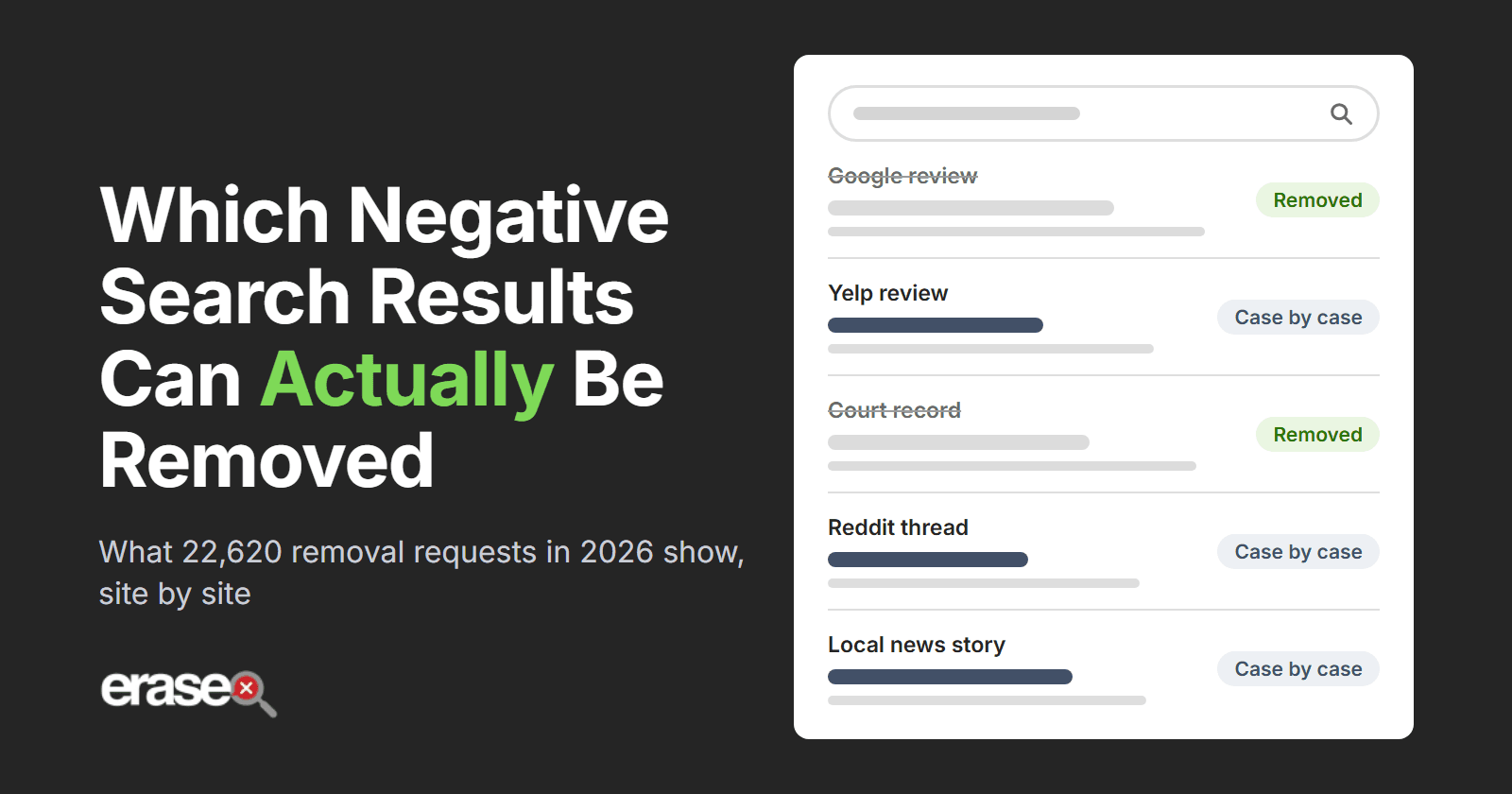
  • Google reviews and republished court records are the most removable negative results according to Erase's data
  • Yelp reviews, Reddit threads, and local news stories are significantly harder to remove from search results
  • Negative content also appears in AI-generated answers, requiring separate suppression strategies
  • The removability of negative results varies dramatically by source and platform
  • Practitioners should prioritize removal efforts on high-success-rate platforms rather than attempting all sources equally

Why it matters: SEO and reputation professionals need to know which removal tactics will actually work before investing time and resources. Focusing on Google reviews and court records first maximizes ROI on negative content suppression, while understanding the difficulty of removing third-party platforms like Yelp and Reddit helps set realistic client expectations.

Negative SEOReputation ManagementSearch Results RemovalContent Suppression
Google Search Console Lets You Filter By Multiple Countries
Search Engine Journal·Oct 6, 2026
Important

Google Search Console Lets You Filter By Multiple Countries

Key Takeaways

  • Users can select multiple countries at once in the Performance report filters instead of viewing one country at a time
  • The feature applies to both country and device filters in Search Console
  • Google positions this as a time-saving feature for analyzing traffic patterns across multiple geographic markets

Why it matters: International SEO practitioners managing multi-country sites can now compare and analyze traffic across regions more efficiently without running separate filtered reports for each country. This streamlines workflow for sites with significant traffic from multiple markets.

Search ConsoleInternational SEOPerformance Report
Google Changed Its Helpful Content Guidelines To Emphasize Good ‘Main Content’
Search Engine Journal·Oct 6, 2026
Good to Know

Google Changed Its Helpful Content Guidelines To Emphasize Good ‘Main Content’

Key Takeaways

  • Google revised its 'Creating helpful, reliable, people-first content' documentation, a core piece of search guidance
  • The update reflects principles Google uses to train its machine learning ranking systems
  • Author suggests the timing of this guidance update alongside Gemini 4 Argon indicates a major core update may be coming
  • The focus is on main content quality as a ranking signal
  • This is unconfirmed speculation about an upcoming update, not an official Google announcement of a core update

Why it matters: If a core update is indeed coming, SEO practitioners need to audit whether their main content meets Google's quality standards. The updated guidance provides the framework Google will likely use to evaluate content, making it essential reading for anyone managing organic search visibility.

Helpful Content GuidelinesCore Update SpeculationMain Content QualityGoogle Search Guidance
How To Structure A Full-Funnel Ecommerce Account For Q4
Search Engine Journal·Oct 6, 2026
Good to Know

How To Structure A Full-Funnel Ecommerce Account For Q4

Key Takeaways

  • Automated full-funnel campaigns (Google and Meta) default to bottom-funnel spending because conversions are cheapest there, not because they cover all stages equally
  • Advertisers must actively exclude existing customers from automated campaigns to prevent budget waste on low-intent retargeting
  • Prospecting budget must be protected and funded intentionally upstream; the algorithm will not allocate to awareness or consideration stages without explicit constraints
  • Q4 planning should begin immediately (article published early October) to implement account structure before Black Friday on November 27
  • The work is not adding more campaigns but strategically excluding audiences and ring-fencing budget to force the bidder to spend on higher-funnel activities

Why it matters: Ecommerce advertisers who don't actively structure their accounts will see Q4 budgets concentrate on existing customers and bottom-funnel conversions, missing high-intent prospecting opportunities and wasting spend on cheap but low-value actions. Proper exclusions and budget allocation directly impact ROAS and customer acquisition cost during the highest-revenue season.

Full-Funnel EcommerceGoogle AdsMeta AdsQ4 StrategyBudget Allocation
Google Explains Couldn’t Fetch Sitemap Errors
Search Engine Journal·Oct 6, 2026
Good to Know

Google Explains Couldn’t Fetch Sitemap Errors

Key Takeaways

  • Google admits the error message lacks clarity about what actually went wrong with sitemap fetching
  • The 'couldn't fetch' message doesn't communicate the real technical issues to site owners
  • This is a known limitation in how Google communicates sitemap errors in Search Console

Why it matters: Site owners relying on Search Console error messages to diagnose sitemap problems may waste time troubleshooting the wrong issues. Clearer error messaging from Google would help SEOs identify and fix sitemap problems faster, reducing indexation delays.

Search ConsoleSitemapsTechnical SEOGoogle Errors
OpenAI To Watermark ChatGPT Text In The EU, Opens API Opt-In
Search Engine Journal·Oct 6, 2026
Good to Know

OpenAI To Watermark ChatGPT Text In The EU, Opens API Opt-In

Key Takeaways

  • OpenAI is implementing invisible watermarking for ChatGPT and Codex outputs in the EU region specifically
  • API users can opt into watermarking on select models, not mandatory across all use cases
  • Watermark detector access will start with approved researchers only, not public release
  • OpenAI's own testing revealed the watermark degrades when text is edited with synonyms or when passages are shortened
  • This is a compliance or transparency measure, likely tied to EU regulations around AI-generated content disclosure

Why it matters: For SEO and content professionals, watermarked AI text could eventually become detectable at scale if detector tools become widely available, affecting how AI-generated content is identified and potentially ranked. The opt-in nature for API users means some AI-generated content will be marked while other sources remain unmarked, creating an uneven detection landscape. The known weakness to editing means watermarks alone won't reliably identify AI content that's been revised.

AI WatermarkingOpenAIEU RegulationAI DetectionContent Attribution
New learning paths: curated YouTube playlists for Search fundamentals and Technical SEO
Google Search Central·Oct 6, 2026
Good to Know

New learning paths: curated YouTube playlists for Search fundamentals and Technical SEO

Key Takeaways

  • Google has created official YouTube learning playlists focused on Search fundamentals and Technical SEO topics
  • The playlists are curated and organized as structured learning paths rather than individual videos
  • This is an official Google Search Central resource available on the Google for Developers platform
  • The resource is designed to help developers and SEO professionals build foundational knowledge systematically

Why it matters: SEO professionals and developers now have an official, structured learning resource directly from Google that can help them understand search fundamentals and technical SEO best practices. This reduces reliance on third-party sources and ensures learners are getting guidance aligned with Google's own priorities and recommendations.

Learning ResourcesYouTube PlaylistsTechnical SEOSearch Fundamentals

Never lose a story.

Sign in to save it for later.