
AI Search Brief
← Back to calendar

Friday, October 2, 2026

6 articles

Shopify Now Enrolls Your Store In Every New AI Shopping Channel
Search Engine Journal·Oct 2, 2026
Important

Shopify Now Enrolls Your Store In Every New AI Shopping Channel

Key Takeaways

  • Shopify uses auto-enrollment as the default for new AI shopping channels, requiring merchants to opt out rather than opt in
  • Meta received access to eligible Shopify stores' product data on launch day through a single default setting
  • The auto-enrollment approach affects product visibility and distribution across AI shopping platforms without requiring merchant action
  • Merchants need to actively manage settings to control which AI channels their products appear in

Why it matters: Shopify merchants may not realize their products are automatically distributed to new AI shopping channels, potentially affecting visibility, competition, and data sharing without explicit consent. SEO and ecommerce professionals need to audit Shopify settings to understand where their products are being syndicated and ensure alignment with their distribution strategy.

ShopifyAI ShoppingAuto-EnrollmentProduct DistributionMeta Integration

OpenAI Founding Member: Make LLMs Write Like An Aircraft Manual
Search Engine Journal·Oct 2, 2026
Good to Know

OpenAI Founding Member: Make LLMs Write Like An Aircraft Manual

Key Takeaways

  • Karpathy suggests using controlled English standards from aerospace documentation as a prompt technique to improve LLM output clarity and precision
  • Alternative output formats—diagrams, HTML, custom videos—can replace or supplement text-based LLM responses
  • Karpathy expects users will need to invest more effort in verifying and understanding AI-generated content rather than accepting it at face value

Why it matters: For SEO and content professionals, this signals a shift toward structured, verifiable AI output formats and more rigorous quality control workflows. Using technical writing standards as prompts could improve content reliability for search engines and users, while the emphasis on verification suggests AI-generated content will require more human review before publication.

LLM PromptingContent QualityAI Output FormatsTechnical Writing
Google Adds Fake Author Warning To Helpful Content Guidance
Search Engine Journal·Oct 2, 2026
Important

Google Adds Fake Author Warning To Helpful Content Guidance

Key Takeaways

  • Google's updated guidance now explicitly warns against fake author profiles as a form of deception in helpful content
  • Examples include AI-generated headshots, fabricated author names, and false credentials used to imply expertise
  • This warning mirrors guidance already present in Google's rater guidelines, now surfaced to site owners
  • The guidance targets authors who misrepresent themselves to appear human or credible when they are not

Why it matters: Site owners using AI-generated author bios or fake bylines to appear more authoritative risk violating Google's helpful content standards. This explicit warning signals Google is actively monitoring author authenticity as part of its E-E-A-T evaluation, making transparent author attribution and genuine expertise signals increasingly important for ranking.

Helpful ContentAuthor AuthorityE-E-A-TGoogle Guidance
How We Build An SEO Content Roadmap For The AI Search Era (Step-By-Step)
Search Engine Journal·Oct 2, 2026
General

How We Build An SEO Content Roadmap For The AI Search Era (Step-By-Step)

Key Takeaways

  • Use intent-based keyword clustering to organize content strategy rather than relying on volume alone
  • Prioritize content creation based on revenue potential and lead generation impact, not just search volume
  • Incorporate AI Overview data into roadmap planning to understand how AI systems surface content
  • Build roadmaps that account for AI search behavior and personalization requirements
  • Focus on content architecture that delivers value in an AI-driven search environment

Why it matters: As AI search platforms become mainstream, SEO professionals need to shift from volume-based content strategies to intent-driven, revenue-focused planning. Understanding how AI Overviews surface content and structuring roadmaps accordingly is essential to maintain visibility and drive qualified traffic in a changing search landscape.

Content RoadmapAI SearchKeyword StrategyContent PrioritizationAI Overviews
When A Search Query Becomes A Standing Instruction
Search Engine Journal·Oct 2, 2026
Important

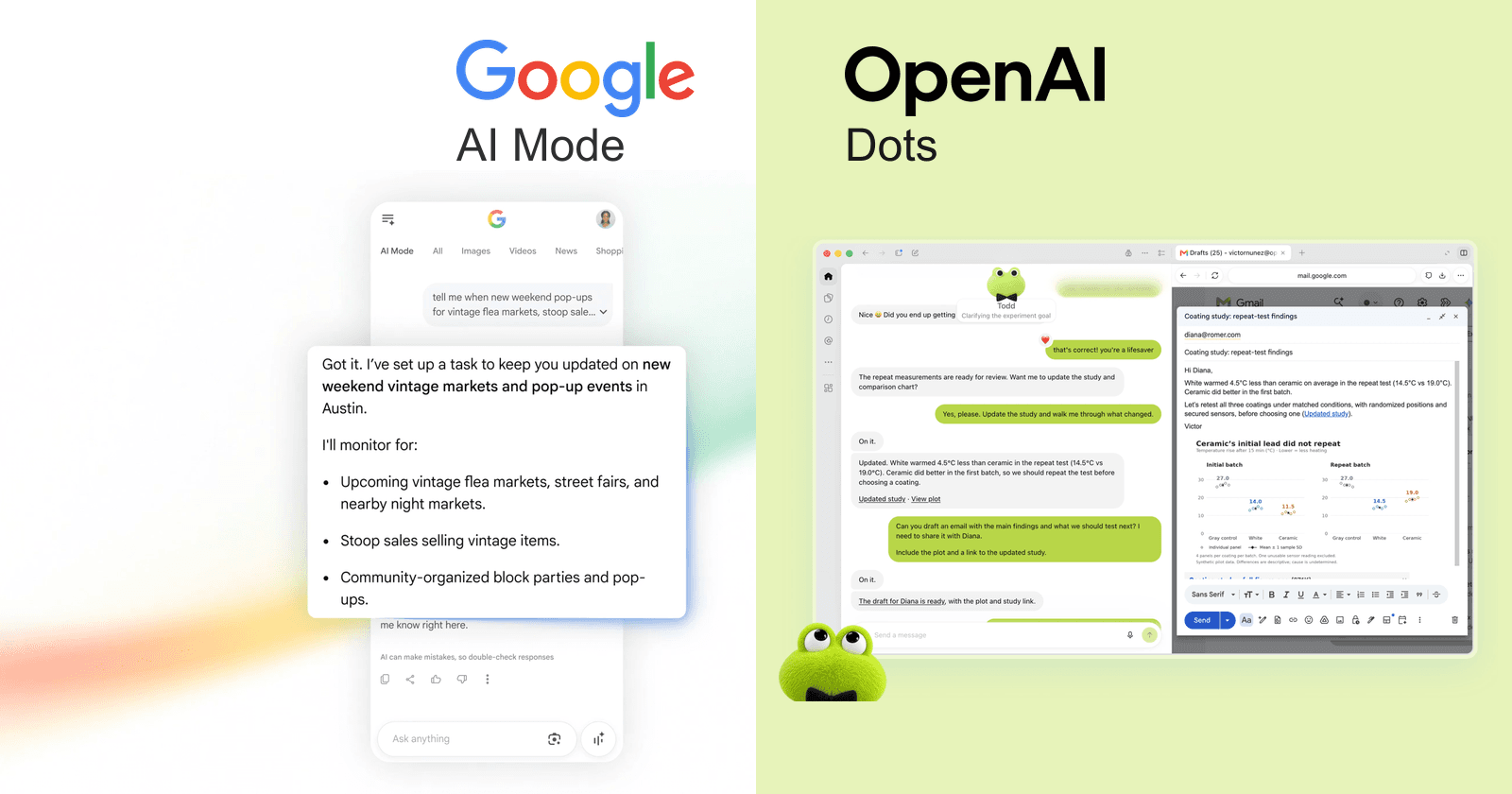
When A Search Query Becomes A Standing Instruction

Key Takeaways

  • Google's AI Mode monitoring now available to all users (previously limited to Ultra/Pro subscribers), allowing users to set up ongoing monitoring of changing information in Search results
  • OpenAI's new 'dots' feature enables always-on ChatGPT agents that continue executing tasks after a single request, representing a shift from one-off queries to persistent instructions
  • The two tools serve different functions: Google's focuses on tracking information changes and sending updates, while OpenAI's dots execute broader tasks with different user controls and transparency mechanisms
  • Both features raise questions about site visibility and how content gets surfaced when AI systems are continuously monitoring or executing standing instructions rather than responding to individual queries

Why it matters: SEO and content professionals need to understand how standing instructions and persistent AI monitoring change content discovery and visibility. Unlike traditional search queries, these always-on agents may surface content differently, require different optimization strategies, and create new attribution and tracking challenges for measuring traffic from AI sources.

AI ModeChatGPT AgentsStanding InstructionsAI Search FeaturesContent Visibility
Google Tells Sites To Fact-Check AI Content Before Publishing
Search Engine Journal·Oct 2, 2026
Important

Google Tells Sites To Fact-Check AI Content Before Publishing

Key Takeaways

  • Google now mandates manual fact-checking of AI-generated content as a critical step before publication
  • The fact-checking requirement extends beyond body text to metadata: titles, meta descriptions, structured data, and alt text
  • Google's guidance emphasizes the risk of AI hallucinations as the reason for this requirement
  • This applies to all AI-generated content, not just specific content types or verticals

Why it matters: Publishers using AI to generate or assist with content creation must now implement a manual review process across all content elements, not just body copy. Failure to fact-check AI output before publishing could result in inaccurate information reaching users and potentially harm site credibility with Google. This guidance signals that Google expects publishers to take responsibility for AI-generated content quality.

AI ContentFact-CheckingGoogle GuidanceContent Quality

Never lose a story.

Sign in to save it for later.