AI Search Brief
← Back to calendar

Friday, August 28, 2026

7 articles

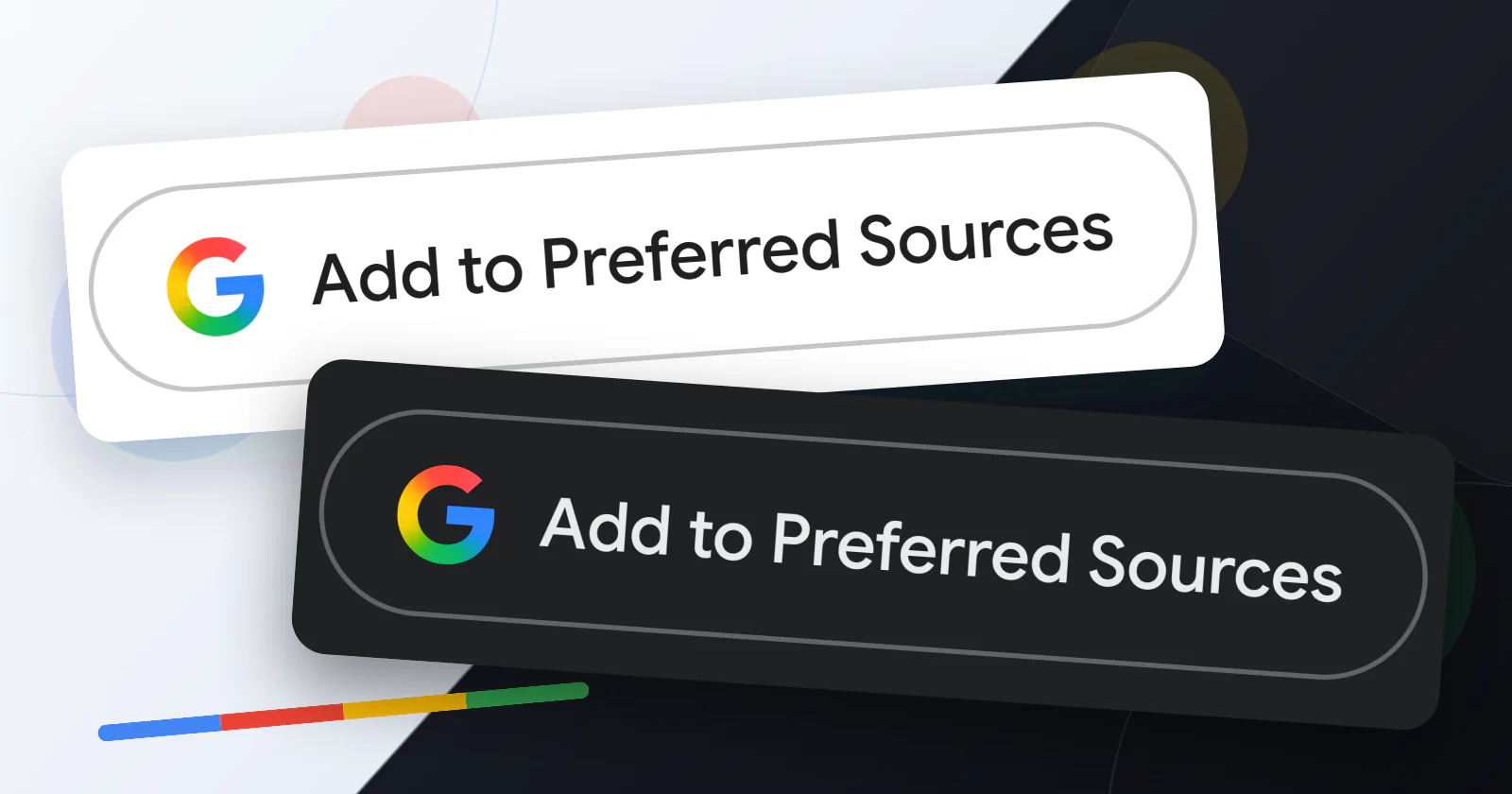
How To Add Google’s Preferred Sources Button To Your Website
Search Engine Journal·Aug 28, 2026
General

How To Add Google’s Preferred Sources Button To Your Website

Key Takeaways

  • Google offers a Preferred Sources button that websites can add to direct users to Google Search
  • Two implementation methods are available: embed code and deeplink approaches
  • The button supports both light and dark theme styling options
  • A WordPress widget version is available for sites using that platform
  • The feature allows publishers to promote their content within Google's search ecosystem

Why it matters: For publishers and content creators, adding a Preferred Sources button can increase visibility in Google Search and potentially drive more qualified traffic from users actively searching for their content. This is particularly relevant as Google emphasizes preferred sources in AI Overviews and search results.

Google Preferred SourcesImplementation GuideWebsite IntegrationWordPress

AI Isn’t Killing Marketing Accountability, It’s Exposing Who Never Had It
Search Engine Journal·Aug 28, 2026
Good to Know

AI Isn’t Killing Marketing Accountability, It’s Exposing Who Never Had It

Key Takeaways

  • Meta's ad AI modified approved creative (text and product photos) after the campaign went live without human review or team notification
  • The accountability gap exists because most marketing teams lack clear ownership of what AI systems change after initial approval
  • Platforms increasingly use AI to optimize ads post-launch, but teams have no visibility into or control over these modifications
  • This is not a new problem—it exposes pre-existing accountability failures that AI is now making visible and consequential
  • Teams need explicit processes defining who owns AI-driven changes and how to audit them after launch

Why it matters: As platforms increasingly deploy AI to modify ads, landing pages, and content after approval, marketers must establish clear ownership and audit trails for post-launch changes. Without these controls, teams lose visibility into what's running under their brand and cannot defend quality or compliance decisions. This is especially critical for regulated industries and brand-sensitive campaigns.

AI AccountabilityMeta AdsMarketing OperationsAI Governance
WebMCP Connects AI Agents To Actions Inside Websites
Search Engine Journal·Aug 28, 2026
Good to Know

WebMCP Connects AI Agents To Actions Inside Websites

Key Takeaways

  • WebMCP provides a standardized way for AI agents to perform actions on websites without relying on visual interface clicks
  • Major platforms including OpenAI, Shopify, and Cloudflare are actively deploying WebMCP in production
  • The protocol allows AI agents to access website functionality through structured, machine-readable interfaces

Why it matters: As AI agents become more capable at taking actions on websites, WebMCP adoption by major platforms signals a shift toward standardized, reliable AI-website interaction. For SEO and content professionals, this means websites may need to expose structured action endpoints for AI agents to interact with them effectively, similar to how structured data became important for search engines.

AI AgentsWebMCPWebsite IntegrationAI Automation
AI Is Changing Website Security. Here’s What SEO Teams Should Know
Search Engine Journal·Aug 28, 2026
Important

AI Is Changing Website Security. Here’s What SEO Teams Should Know

Key Takeaways

  • OpenAI, Google, Microsoft, and 100+ organizations jointly warned about accelerating AI-enabled cyberattacks
  • The article connects AI-driven security threats to potential risks for search visibility and website rankings
  • SEO teams need to understand how compromised websites or security breaches can impact their search performance
  • AI is being weaponized to automate and scale cyberattacks more effectively than traditional methods
  • Website security is now a critical concern for SEO professionals, not just IT departments

Why it matters: A compromised website can lose search visibility, rankings, and traffic. SEO teams that understand AI-driven security threats can better advocate for security investments and help protect their sites from attacks that could tank organic performance. This bridges the gap between security and SEO, making it a shared responsibility.

Website SecurityAI ThreatsCyberattacksSearch VisibilityRisk Management
Google Answers If Updates Come With Actionable SEO Signals
Search Engine Journal·Aug 28, 2026
Good to Know

Google Answers If Updates Come With Actionable SEO Signals

Key Takeaways

  • Google stated that named updates like core updates do not include discrete, actionable signals for SEO practitioners to follow
  • Site owners should rely on Google's published guidance and best practices rather than looking for hidden signals tied to specific updates
  • Search Console remains the primary tool for monitoring how updates affect individual sites
  • Google emphasizes that updates reflect changes to how the algorithm ranks content, not new ranking factors to optimize for

Why it matters: This clarification helps SEO professionals avoid wasting time searching for non-existent 'update signals' and instead focus on proven optimization fundamentals. It reinforces that algorithm updates are algorithmic refinements, not instruction manuals, and that the best response is consistent adherence to Google's core guidance rather than reactive chasing of update-specific tactics.

Google UpdatesAlgorithm ChangesSEO GuidanceSearch Console
Google Updates Site Reputation Abuse (Parasite SEO) Policy
Search Engine Journal·Aug 28, 2026
Important

Google Updates Site Reputation Abuse (Parasite SEO) Policy

Key Takeaways

  • Manual actions for site reputation abuse are being discontinued in the EEA and replaced with a different ranking approach
  • The new system allows Google to rank affected sections of a site independently instead of applying site-wide penalties
  • Google updated its spam policy guidance with more detailed examples of how it identifies site reputation abuse
  • This change applies specifically to the European Economic Area, not globally
  • The policy shift reflects a move away from binary penalties toward more granular content evaluation

Why it matters: Sites in the EEA hosting third-party content (guest posts, sponsored content, user-generated content) will no longer face site-wide manual penalties for reputation abuse. Instead, Google will evaluate and rank individual sections on their own merit, potentially allowing legitimate content to rank even if other sections violate the policy. This is a significant shift for publishers managing mixed-quality content on shared domains.

Site Reputation AbuseParasite SEOEEA PolicyManual ActionsGoogle Spam Policy
Update to the Site Reputation Policy
Google Search Central·Aug 28, 2026
Critical

Update to the Site Reputation Policy

Key Takeaways

  • Unable to retrieve full article content from the URL provided
  • The page structure shows navigation and blog archive information only
  • The actual policy update details are not present in the fetched document

Why it matters: Without access to the actual article content, I cannot determine what specific changes Google made to the Site Reputation Policy or how they affect SEO practitioners. This information would be critical to assess if immediate action is needed.

Site Reputation PolicyGoogle Search CentralPolicy Update

Never lose a story.

Sign in to save it for later.