
AI Search Brief
← Back to calendar

Tuesday, August 18, 2026

7 articles

How Google AIOs Use Facebook, Instagram & TikTok From 300 Million US Searches
Search Engine Journal·Aug 18, 2026
Important

How Google AIOs Use Facebook, Instagram & TikTok From 300 Million US Searches

Key Takeaways

  • Google AIOs cite Facebook, Instagram, and TikTok selectively based on query type rather than uniformly across all searches
  • The research analyzed 300 million US searches to map which social platform Google trusts as an authority for specific question categories
  • Different social platforms serve as the primary cited source for different kinds of queries in AI Overviews
  • The data reveals patterns in how Google's AI systems evaluate and rank social content as authoritative sources

Why it matters: Social media platforms are now direct sources of authority for AI Overviews, not just traffic drivers. Understanding which platform Google trusts for your content category helps you optimize social presence for AI visibility and citation, directly impacting how your brand appears in AI-generated answers.

AI OverviewsSocial Media AuthorityGoogle SearchContent Sourcing

Everyone Is Negotiating With Google While Meta Reads The Web For Free
Search Engine Journal·Aug 18, 2026
Important

Everyone Is Negotiating With Google While Meta Reads The Web For Free

Key Takeaways

  • Meta's crawlers read more of the web than OpenAI, Anthropic, and other AI bots that publishers have blocked via robots.txt
  • Publishers and regulators are negotiating with Google over content licensing but applying no equivalent pressure to Meta
  • Meta's data collection for AI training operates with minimal friction despite accessing more content than competitors
  • The asymmetry reflects different regulatory scrutiny and publisher leverage against Google versus Meta

Why it matters: SEO and content professionals need to understand that blocking AI crawlers via robots.txt is selective and incomplete—Meta's access remains largely uncontrolled while Google faces licensing demands. This affects content strategy decisions around AI training data protection and reveals a regulatory blind spot that could shift as Meta's AI ambitions grow.

Meta AI TrainingWeb CrawlingContent LicensingAI Regulation
Google Begins Rolling Out The August 2026 Spam Update
Search Engine Journal·Aug 18, 2026
Important

Google Begins Rolling Out The August 2026 Spam Update

Key Takeaways

  • August 2026 spam update is now rolling out globally to all languages
  • This is Google's third spam update in 2026, following March and June releases
  • No new spam policies or official blog post accompanied this rollout announcement
  • The update applies site-wide across all regions and languages

Why it matters: SEO professionals need to monitor their sites for potential ranking volatility during this rollout period. Without accompanying policy details, practitioners should review existing spam guidelines and audit for common spam signals to understand potential impact on their properties.

Google Spam UpdateAlgorithm RolloutAugust 2026
Why Search Volume Is Screening Out Your Best Content Opportunities
Search Engine Journal·Aug 18, 2026
Important

Why Search Volume Is Screening Out Your Best Content Opportunities

Key Takeaways

  • Search volume data doesn't reflect how AI systems like ChatGPT and Gemini actually surface content, missing high-intent queries that drive citations
  • Content teams optimize for traditional search volume but miss opportunities in sub-questions, entity-based queries, and buyer decision content that AI systems prioritize
  • Shifting from search-volume-first to AI-intent-first content strategy requires identifying what questions AI systems actually answer and which content gets cited
  • High-volume keywords may not correlate with AI visibility or citation potential, requiring new metrics and prioritization frameworks for AI-search era

Why it matters: SEO teams relying solely on search volume to prioritize content are systematically missing opportunities to earn AI citations and drive conversions. As AI search grows, traditional keyword research workflows become misaligned with how content actually gets surfaced, making it critical to audit content strategy against AI-specific signals rather than legacy search metrics.

AI SearchContent StrategyKeyword ResearchAI CitationsSearch Volume
9 AI Search Myths, Debunked by 15 Million Data Points
Search Engine Journal·Aug 18, 2026
Good to Know

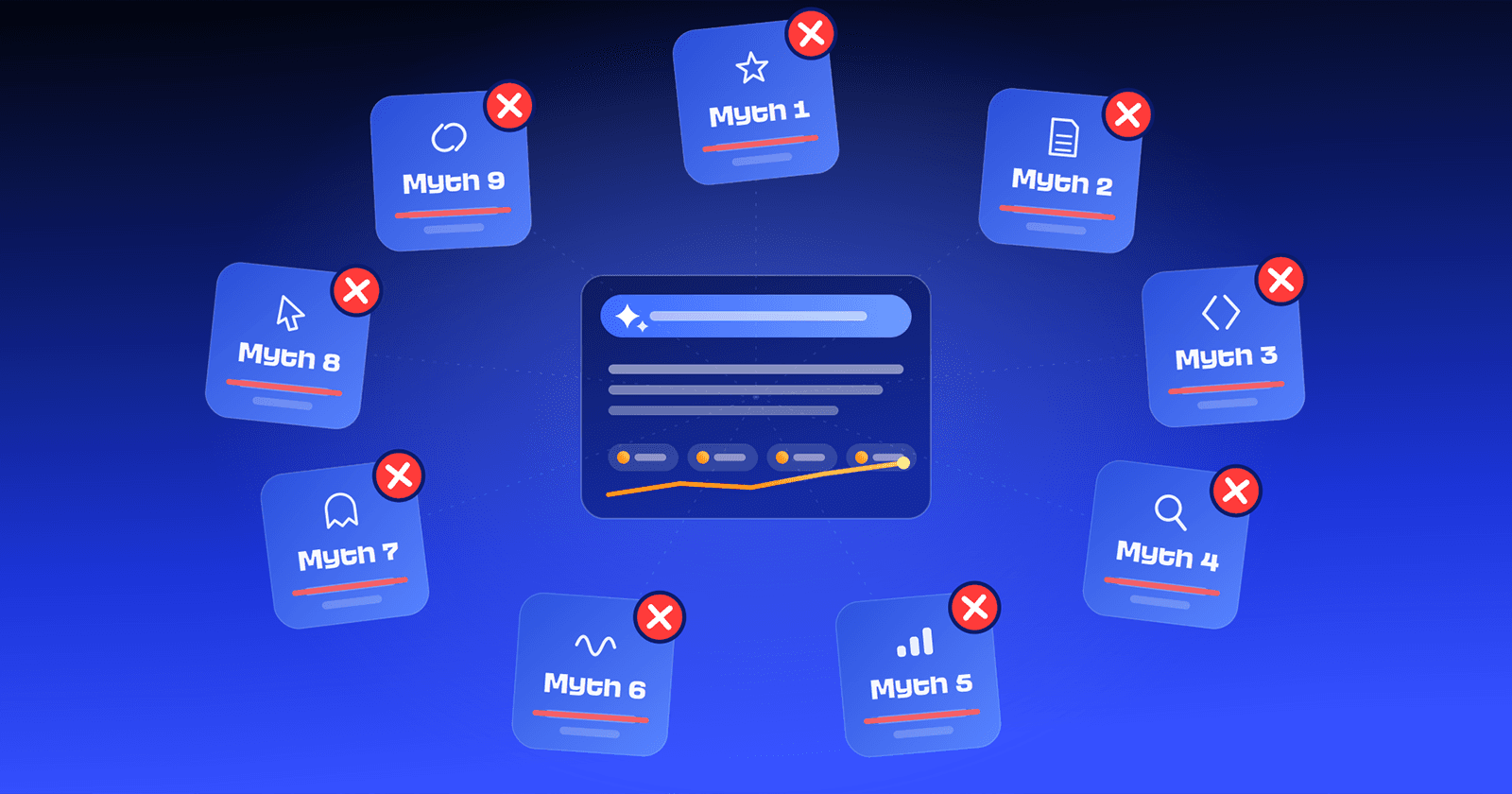
9 AI Search Myths, Debunked by 15 Million Data Points

Key Takeaways

  • Ahrefs has conducted over 50 AI research studies specifically designed to test industry claims about AI search with little prior evidence
  • The article examines nine specific myths about AI search rankings using a dataset of 15 million data points
  • The research aims to separate fact from speculation in AI search optimization claims that lack empirical backing
  • Findings are based on Ahrefs' proprietary data collection and analysis methodology
  • The study targets common misconceptions repeated by industry figures and Google itself

Why it matters: For SEO and AI-search professionals, data-backed debunking of widespread myths helps separate actionable strategy from unfounded assumptions. Understanding which common claims hold up under scrutiny versus which don't can redirect optimization efforts toward tactics with real impact rather than chasing unproven best practices.

AI SearchData StudyRanking FactorsMyth DebunkingAhrefs Research
What We Can Learn From Evolving ChatGPT Fan-Out Queries
Search Engine Journal·Aug 18, 2026
Good to Know

What We Can Learn From Evolving ChatGPT Fan-Out Queries

Key Takeaways

  • ChatGPT is using site: operator searches in fan-out queries to curate results from higher-quality, trusted sources
  • This approach appears designed to reduce spam and low-quality information in AI-generated answers
  • The shift represents OpenAI's effort to improve source quality in retrieval-augmented generation (RAG) processes
  • Fan-out query behavior is evolving rapidly, making it difficult to track and analyze in real time

Why it matters: SEO professionals need to understand that ChatGPT's preference for trusted domains in fan-out queries means visibility depends partly on domain authority and trust signals, not just content relevance. Sites that aren't in ChatGPT's trusted set face reduced visibility in AI search results, making domain reputation and quality signals increasingly critical for AI search visibility.

ChatGPT SearchFan-Out QueriesAI Search QualityDomain Trust
Get Your Business Found & Chosen In AI Search [Free SEJ Live Event]
Search Engine Journal·Aug 18, 2026
General

Get Your Business Found & Chosen In AI Search [Free SEJ Live Event]

Key Takeaways

  • SEJ Live event scheduled for August 26, 12-3 p.m. ET
  • Three sessions focus on local visibility in AI search, lead attribution, and building pages AI engines trust and cite
  • Event targets local search practitioners and businesses seeking visibility in ChatGPT, Gemini, and AI Overviews
  • Free registration available

Why it matters: Local businesses and SEO practitioners need practical guidance on optimizing for AI search engines, which are increasingly influencing how customers discover local services. Understanding how AI engines select and cite local recommendations is critical for maintaining visibility as search behavior shifts.

AI SearchLocal SEOAI OverviewsEvent

Never lose a story.

Sign in to save it for later.